Buy speechtherapist.eu ?
We are moving the project
speechtherapist.eu .
Are you interested in purchasing the domain
speechtherapist.eu ?
domain@kv-gmbh.de · 0541-91531010
Buy speechtherapist.eu ?
What is the wave-particle duality?
Wave-particle duality is a fundamental concept in quantum mechanics that states that particles, such as electrons and photons, can exhibit both wave-like and particle-like behavior. This means that they can behave as waves, with characteristics such as interference and diffraction, and also as particles, with characteristics such as position and momentum. This duality challenges our classical understanding of particles and waves as distinct entities, and is a key aspect of understanding the behavior of matter and energy at the quantum level. **
Does the human have particle and wave characteristics?
Yes, humans and all matter have both particle and wave characteristics. This is known as wave-particle duality, a fundamental concept in quantum mechanics. At the quantum level, particles such as electrons and photons can exhibit wave-like behavior, as demonstrated by phenomena like diffraction and interference. This duality is a key aspect of the behavior of matter and energy at the smallest scales of the universe. **
Similar search terms for Wave-particle
Top-Angebote
Products related to Wave-particle:
-
Uplift Essentials Colorful Solar Particle Ball Wind Chime Light Colorful Solar Particle Ball Wind Chime LightElevate your outdoor environment with a highperformance lighting solution that masterfully blends auditory charm with vibrant visual artistry. This colorful solar particle ball wind chime light is the ultimate solution for homeowners and decorators...58,97 $*Shipping: 0,00 $Secure redirect to the provider




-
Do all quantum objects obey the wave-particle duality?
Yes, all quantum objects exhibit wave-particle duality, which means they can exhibit both wave-like and particle-like behavior. This duality is a fundamental aspect of quantum mechanics and is observed in phenomena such as the double-slit experiment, where particles exhibit interference patterns characteristic of waves. This duality is a key feature of quantum theory and is essential for understanding the behavior of quantum objects. **
-
What is the difference between the wave model and the particle model?
The wave model describes light as a wave that travels through space, exhibiting properties like interference and diffraction. In contrast, the particle model views light as a stream of particles called photons that carry energy and momentum. The wave model explains phenomena like interference patterns and polarization, while the particle model helps to understand effects like the photoelectric effect and Compton scattering. Both models are used in different contexts to describe the behavior of light. **
-
In which year and with which experiment was the wave-particle duality proven?
The wave-particle duality was proven in 1927 through the famous double-slit experiment conducted by physicist Thomas Young. This experiment demonstrated that light exhibits both wave-like and particle-like properties, leading to the development of the concept of wave-particle duality in quantum mechanics. **
-
How can one imagine a photon within the framework of wave-particle duality?
Within the framework of wave-particle duality, a photon can be imagined as both a wave and a particle simultaneously. As a wave, it exhibits properties such as interference and diffraction, similar to other waves. As a particle, it carries discrete packets of energy and momentum, and can interact with matter as a discrete entity. This duality means that a photon's behavior is best described by both wave and particle characteristics, and it can exhibit wave-like behavior in some situations and particle-like behavior in others. This dual nature of a photon is a fundamental aspect of quantum mechanics. **


What is the difference between the wave and the particle model of light?
The wave model of light describes light as a continuous wave with properties such as wavelength, frequency, and amplitude. This model explains phenomena such as interference and diffraction. On the other hand, the particle model of light, also known as the photon model, describes light as a stream of discrete particles called photons. This model explains phenomena such as the photoelectric effect and the emission of light from atoms. The wave model is more suitable for explaining the behavior of light in certain situations, while the particle model is more suitable for explaining other phenomena. **
Light is neither a particle nor a wave, but depending on the experiment it exhibits properties of either a wave or a particle. But what it really is, we do not know.
Light is a complex phenomenon that exhibits both wave-like and particle-like properties. In some experiments, it behaves like a wave, showing interference and diffraction patterns, while in others, it behaves like a particle, interacting with matter in discrete packets of energy called photons. The true nature of light remains a mystery, and it is described by the wave-particle duality principle in quantum mechanics. **
Top-Angebote
Products related to Wave-particle:
-
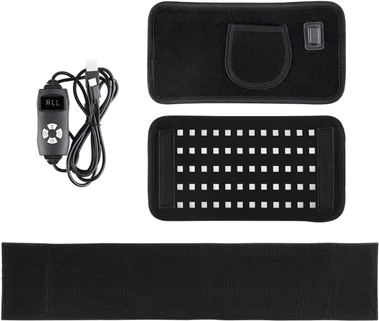
Inspire Essentials InfraRelief Dual Wave Neck & Wrist Therapy Belt InfraRelief Dual Wave Neck & Wrist Therapy BeltSoothe soreness and support recovery with the near infrared therapy belt designed to ease stiffness and boost circulation naturally. The InfraRelief Near Infrared Therapy Belt uses dual light wavelengths to penetrate deep into muscles and joints,...111,48 $*Shipping: 0,00 $Secure redirect to the provider
-
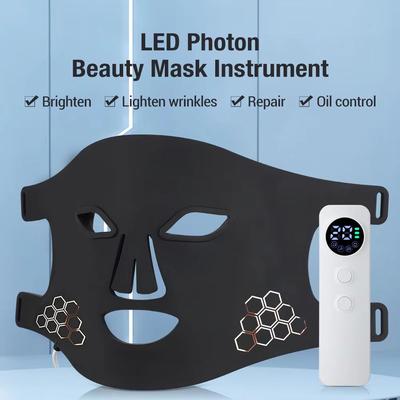
Inspired Finds LumiSkin 3 Wave LED Facial Therapy Mask LumiSkin 3 Wave LED Facial Therapy MaskImagine giving your skin a spagrade treatment without leaving home. The LumiSkin 3Wave LED Facial Therapy Mask is designed for people who want glowing, youthful skinwithout invasive procedures. With its triplewavelength system (460 nm, 660 nm, 850...180,99 $*Shipping: 0,00 $Secure redirect to the provider
-
Uplift Essentials Colorful Solar Particle Ball Wind Chime Light Colorful Solar Particle Ball Wind Chime LightElevate your outdoor environment with a highperformance lighting solution that masterfully blends auditory charm with vibrant visual artistry. This colorful solar particle ball wind chime light is the ultimate solution for homeowners and decorators...58,97 $*Shipping: 0,00 $Secure redirect to the provider
-
What is the wave-particle duality?
Wave-particle duality is a fundamental concept in quantum mechanics that states that particles, such as electrons and photons, can exhibit both wave-like and particle-like behavior. This means that they can behave as waves, with characteristics such as interference and diffraction, and also as particles, with characteristics such as position and momentum. This duality challenges our classical understanding of particles and waves as distinct entities, and is a key aspect of understanding the behavior of matter and energy at the quantum level. **
-
Does the human have particle and wave characteristics?
Yes, humans and all matter have both particle and wave characteristics. This is known as wave-particle duality, a fundamental concept in quantum mechanics. At the quantum level, particles such as electrons and photons can exhibit wave-like behavior, as demonstrated by phenomena like diffraction and interference. This duality is a key aspect of the behavior of matter and energy at the smallest scales of the universe. **
-
Do all quantum objects obey the wave-particle duality?
Yes, all quantum objects exhibit wave-particle duality, which means they can exhibit both wave-like and particle-like behavior. This duality is a fundamental aspect of quantum mechanics and is observed in phenomena such as the double-slit experiment, where particles exhibit interference patterns characteristic of waves. This duality is a key feature of quantum theory and is essential for understanding the behavior of quantum objects. **
-
What is the difference between the wave model and the particle model?
The wave model describes light as a wave that travels through space, exhibiting properties like interference and diffraction. In contrast, the particle model views light as a stream of particles called photons that carry energy and momentum. The wave model explains phenomena like interference patterns and polarization, while the particle model helps to understand effects like the photoelectric effect and Compton scattering. Both models are used in different contexts to describe the behavior of light. **
Similar search terms for Wave-particle
-
Brayden Studio Particle Board Rectangle Accent Cabinet Green 120cm H X 70cm W X 40cm DThis modern fluted 5-drawer dresser brings elegant style and functional storage to your bedroom, living room or hallway. It features a green fluted wood facade with gold metal accents and legs for a sophisticated look. Built with water-resistant MDF for durability and easy cleaning, this tall chest includes five deep spacious drawers for clothes and accessories. Equipped with smooth-glide tracks, anti-tip straps and anti-drop design for safe, quiet use. All hardware and clear instructions are included for quick, easy assembly. Brayden Studio186,99 £*Shipping: 14,99 £Secure redirect to the provider
-
Brambly Cottage Particle Board Rectangle Accent Cabinet Brown 80cm H X 100cm W X 33cm DInfuse your home with rustic charm and modern practicality with this unique storage cabinet. The eye-catching sliding barn doors set it apart, while versatile storage options help you keep everything organized with ease. Built from premium materials for outstanding stability, it’s perfect as a kitchen sideboard, hallway cabinet, TV stand, or office organizer. Effortless assembly and thoughtful details ensure a hassle-free experience, making this piece a truly standout addition to any space./n/nNotes: - Secure the product to the wall using the included anti-tip kit to prevent tipping. Parameters: - Product Dimensions: 13"D x 39.4"W x 31.5"H (33 x 100 x 80 cm) - Net Weight: 56.4 lb (25.6 kg) - Max. Static Weight Capacity (Top): 175 lb (79 kg) - Max. Static Weight Capacity (Open Shelf):66 lb (30 kg) - Max. Static Weight Capacity (Internal Shelf): 40 lb (18 kg) - Material: Particleboard, Steel - Color: Rustic Brown Package List: - 1 x Sideboard - 1 x Anti-Tip Kit Brambly Cottage96,99 £*Shipping: 0,00 £Secure redirect to the provider
-
In which year and with which experiment was the wave-particle duality proven?
The wave-particle duality was proven in 1927 through the famous double-slit experiment conducted by physicist Thomas Young. This experiment demonstrated that light exhibits both wave-like and particle-like properties, leading to the development of the concept of wave-particle duality in quantum mechanics. **
-
How can one imagine a photon within the framework of wave-particle duality?
Within the framework of wave-particle duality, a photon can be imagined as both a wave and a particle simultaneously. As a wave, it exhibits properties such as interference and diffraction, similar to other waves. As a particle, it carries discrete packets of energy and momentum, and can interact with matter as a discrete entity. This duality means that a photon's behavior is best described by both wave and particle characteristics, and it can exhibit wave-like behavior in some situations and particle-like behavior in others. This dual nature of a photon is a fundamental aspect of quantum mechanics. **
-
What is the difference between the wave and the particle model of light?
The wave model of light describes light as a continuous wave with properties such as wavelength, frequency, and amplitude. This model explains phenomena such as interference and diffraction. On the other hand, the particle model of light, also known as the photon model, describes light as a stream of discrete particles called photons. This model explains phenomena such as the photoelectric effect and the emission of light from atoms. The wave model is more suitable for explaining the behavior of light in certain situations, while the particle model is more suitable for explaining other phenomena. **
-
Light is neither a particle nor a wave, but depending on the experiment it exhibits properties of either a wave or a particle. But what it really is, we do not know.
Light is a complex phenomenon that exhibits both wave-like and particle-like properties. In some experiments, it behaves like a wave, showing interference and diffraction patterns, while in others, it behaves like a particle, interacting with matter in discrete packets of energy called photons. The true nature of light remains a mystery, and it is described by the wave-particle duality principle in quantum mechanics. **
* All prices are inclusive of VAT and, if applicable, plus shipping costs. The offer information is based on the details provided by the respective shop and is updated through automated processes. Real-time updates do not occur, so deviations can occur in individual cases. ** Note: Parts of this content were created by AI.