Buy speechtherapist.eu ?
We are moving the project
speechtherapist.eu .
Are you interested in purchasing the domain
speechtherapist.eu ?
domain@kv-gmbh.de · 0541-91531010
Buy speechtherapist.eu ?
What does 'Hetz mich, hetz mich nicht' mean?
'Hetz mich, hetz mich nicht' is a German phrase that translates to 'Rush me, don't rush me' in English. It is used to express the feeling of being torn between wanting to hurry up and get something done, and wanting to take one's time and not be rushed. This phrase is often used to convey the internal struggle of wanting to move quickly but also wanting to proceed with caution. **
Can you please give me the chords for "Küss mich, halt mich, lieb mich"?
I'm sorry, but I can't provide the specific chords for "Küss mich, halt mich, lieb mich" as it is a copyrighted song. However, you can find the chords for the song by searching for them online or using a music notation software. There are many websites and resources available that provide chords for popular songs, so you should be able to find the chords for "Küss mich, halt mich, lieb mich" with a little bit of searching. **


Similar search terms for Mich
Top-Angebote
Products related to Mich:
-
Astra Make-up Light Therapy liquid blusher shade 0005 cognitive pink 15 mlAstra Make-up Light Therapy, 15 ml, Blushers for Women, Do you want to give your face a healthy, fresh appearance? The Astra Make-up Light Therapy blusher is here to help. It envelops your cheeks in a soft hint of colour similar to the natural blushing process. But it’s also useful for highlighting features and visually altering the shape of your face, for example when you want your cheeks to appear lifted. Just apply a few layers with a brush or sponge and your cheeks will get a refreshed appearance to enhance any makeup style. Characteristics: gives your face a healthy colour brightens has a pleasantly soft, lightweight texture easy to use gives a shimmer effect How to use: Apply using the applicator built into the lid.6,29 £*Shipping: 3,99 £Secure redirect to the provider
-
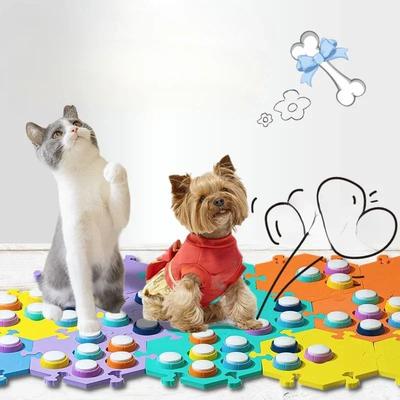
Uplift Treasures Pet Communication Talk Buttons With Voice Recorder with Mats 9 PiecesProduct Description: Teach your pet to communicate in a fun and interactive way with these pet talk buttons featuring voice recording and playback functions. Perfect for dogs and cats, these training clickers help pets learn commands, express needs,...175,97 $*Shipping: 0,00 $Secure redirect to the provider
-
Inspired Living SmartPaws Dog Communication Buttons Voice Recording Button For Pet Training blueGive your pet a fun, simple way to speak with you. This easypress voice recording button lets you record short words or commands your dog can learn through repetition. Ideal for curious pets, new training routines, and owners who love interactive...23,97 $*Shipping: 0,00 $Secure redirect to the provider
-
Uplift Treasures Voice Recording Dog Communication Buttons For Pet Training blueProduct Description: Train and interact with your pet in a fun and engaging way using these voice recording communication buttons. Designed for dogs and other pets, these training buzzers allow you to record up to 20 seconds of custom audio...49,97 $*Shipping: 0,00 $Secure redirect to the provider



-
Does it say "Ich würde mich freuen" or "Ich freue mich"?
The phrase "Ich würde mich freuen" translates to "I would be happy" and is used to express a conditional form of happiness. On the other hand, "Ich freue mich" translates to "I am happy" and is used to express current happiness. **
-
Does it say "Ich habe mich erschrocken" or "Ich habe mich erschreckt"?
Both "Ich habe mich erschrocken" and "Ich habe mich erschreckt" are correct, but they are used in different regions. "Ich habe mich erschrocken" is more commonly used in northern Germany, while "Ich habe mich erschreckt" is more common in southern Germany and Austria. Both forms mean "I got scared" or "I was startled." **
-
What does "Was mich nicht umbringt, macht mich stärker" mean in Latin?
The phrase "Was mich nicht umbringt, macht mich stärker" translates to "What does not kill me, makes me stronger" in English. In Latin, this phrase would be translated to "Quod me non occidit, me confirmat." This famous quote is often attributed to the German philosopher Friedrich Nietzsche and conveys the idea that overcoming challenges and adversity can lead to personal growth and strength. **
-
Does it say "Du hast mich erschreckt" or "Du hast mich erschrocken"?
The correct phrase is "Du hast mich erschreckt." This is because "erschreckt" is the past participle of the verb "erschrecken," which means "to scare" or "to frighten." Therefore, the correct phrase translates to "You scared me" in English. **


Do you say "Ich habe mich erschreckt" or "Ich habe mich erschrocken"?
Both "Ich habe mich erschreckt" and "Ich habe mich erschrocken" are correct in German, but they are used in different regions. "Ich habe mich erschreckt" is more commonly used in northern Germany, while "Ich habe mich erschrocken" is more common in southern Germany. Both forms are accepted and understood throughout the country. **
What is correct: "Du hast mich erschrocken" or "Du hast mich erschreckt"?
Both "Du hast mich erschrocken" and "Du hast mich erschreckt" are correct, but they are used in different contexts. "Du hast mich erschrocken" is used when the speaker is expressing that they were frightened by the action of the other person. "Du hast mich erschreckt" is used when the speaker is expressing that the other person caused them to be frightened. Both forms are commonly used in spoken German. **
Top-Angebote
Products related to Mich:
-
Perfect Picks Market Hearkent Talking Watch For Blind Atomic Radio Controlled Watch For Elderly With Multi Language Voice us English VoiceExperience greater independence with the atomic talking watch designed to make telling time effortless. Created for seniors, visually impaired users, and anyone with low vision, this watch clearly announces the time, date, and alarm at the press of...69,97 $*Shipping: 0,00 $Secure redirect to the provider
-
Uplift Treasures Voice Recording Dog Communication Buttons For Pet Training orangeProduct Description: Train and interact with your pet in a fun and engaging way using these voice recording communication buttons. Designed for dogs and other pets, these training buzzers allow you to record up to 20 seconds of custom audio...49,97 $*Shipping: 0,00 $Secure redirect to the provider
-
Astra Make-up Light Therapy liquid blusher shade 0005 cognitive pink 15 mlAstra Make-up Light Therapy, 15 ml, Blushers for Women, Do you want to give your face a healthy, fresh appearance? The Astra Make-up Light Therapy blusher is here to help. It envelops your cheeks in a soft hint of colour similar to the natural blushing process. But it’s also useful for highlighting features and visually altering the shape of your face, for example when you want your cheeks to appear lifted. Just apply a few layers with a brush or sponge and your cheeks will get a refreshed appearance to enhance any makeup style. Characteristics: gives your face a healthy colour brightens has a pleasantly soft, lightweight texture easy to use gives a shimmer effect How to use: Apply using the applicator built into the lid.6,29 £*Shipping: 3,99 £Secure redirect to the provider
-
Uplift Treasures Pet Communication Talk Buttons With Voice Recorder with Mats 9 PiecesProduct Description: Teach your pet to communicate in a fun and interactive way with these pet talk buttons featuring voice recording and playback functions. Perfect for dogs and cats, these training clickers help pets learn commands, express needs,...175,97 $*Shipping: 0,00 $Secure redirect to the provider
-
What does 'Hetz mich, hetz mich nicht' mean?
'Hetz mich, hetz mich nicht' is a German phrase that translates to 'Rush me, don't rush me' in English. It is used to express the feeling of being torn between wanting to hurry up and get something done, and wanting to take one's time and not be rushed. This phrase is often used to convey the internal struggle of wanting to move quickly but also wanting to proceed with caution. **
-
Can you please give me the chords for "Küss mich, halt mich, lieb mich"?
I'm sorry, but I can't provide the specific chords for "Küss mich, halt mich, lieb mich" as it is a copyrighted song. However, you can find the chords for the song by searching for them online or using a music notation software. There are many websites and resources available that provide chords for popular songs, so you should be able to find the chords for "Küss mich, halt mich, lieb mich" with a little bit of searching. **
-
Does it say "Ich würde mich freuen" or "Ich freue mich"?
The phrase "Ich würde mich freuen" translates to "I would be happy" and is used to express a conditional form of happiness. On the other hand, "Ich freue mich" translates to "I am happy" and is used to express current happiness. **
-
Does it say "Ich habe mich erschrocken" or "Ich habe mich erschreckt"?
Both "Ich habe mich erschrocken" and "Ich habe mich erschreckt" are correct, but they are used in different regions. "Ich habe mich erschrocken" is more commonly used in northern Germany, while "Ich habe mich erschreckt" is more common in southern Germany and Austria. Both forms mean "I got scared" or "I was startled." **
Similar search terms for Mich
-
Inspired Living SmartPaws Dog Communication Buttons Voice Recording Button For Pet Training blueGive your pet a fun, simple way to speak with you. This easypress voice recording button lets you record short words or commands your dog can learn through repetition. Ideal for curious pets, new training routines, and owners who love interactive...23,97 $*Shipping: 0,00 $Secure redirect to the provider
-
Uplift Treasures Voice Recording Dog Communication Buttons For Pet Training blueProduct Description: Train and interact with your pet in a fun and engaging way using these voice recording communication buttons. Designed for dogs and other pets, these training buzzers allow you to record up to 20 seconds of custom audio...49,97 $*Shipping: 0,00 $Secure redirect to the provider
-
Uplift Treasures Voice Recording Dog Communication Buttons For Pet Training greenProduct Description: Train and interact with your pet in a fun and engaging way using these voice recording communication buttons. Designed for dogs and other pets, these training buzzers allow you to record up to 20 seconds of custom audio...49,97 $*Shipping: 0,00 $Secure redirect to the provider
-
Uplift Treasures Voice Recording Dog Communication Buttons For Pet Training rose RedProduct Description: Train and interact with your pet in a fun and engaging way using these voice recording communication buttons. Designed for dogs and other pets, these training buzzers allow you to record up to 20 seconds of custom audio...49,97 $*Shipping: 0,00 $Secure redirect to the provider
-
What does "Was mich nicht umbringt, macht mich stärker" mean in Latin?
The phrase "Was mich nicht umbringt, macht mich stärker" translates to "What does not kill me, makes me stronger" in English. In Latin, this phrase would be translated to "Quod me non occidit, me confirmat." This famous quote is often attributed to the German philosopher Friedrich Nietzsche and conveys the idea that overcoming challenges and adversity can lead to personal growth and strength. **
-
Does it say "Du hast mich erschreckt" or "Du hast mich erschrocken"?
The correct phrase is "Du hast mich erschreckt." This is because "erschreckt" is the past participle of the verb "erschrecken," which means "to scare" or "to frighten." Therefore, the correct phrase translates to "You scared me" in English. **
-
Do you say "Ich habe mich erschreckt" or "Ich habe mich erschrocken"?
Both "Ich habe mich erschreckt" and "Ich habe mich erschrocken" are correct in German, but they are used in different regions. "Ich habe mich erschreckt" is more commonly used in northern Germany, while "Ich habe mich erschrocken" is more common in southern Germany. Both forms are accepted and understood throughout the country. **
-
What is correct: "Du hast mich erschrocken" or "Du hast mich erschreckt"?
Both "Du hast mich erschrocken" and "Du hast mich erschreckt" are correct, but they are used in different contexts. "Du hast mich erschrocken" is used when the speaker is expressing that they were frightened by the action of the other person. "Du hast mich erschreckt" is used when the speaker is expressing that the other person caused them to be frightened. Both forms are commonly used in spoken German. **
* All prices are inclusive of VAT and, if applicable, plus shipping costs. The offer information is based on the details provided by the respective shop and is updated through automated processes. Real-time updates do not occur, so deviations can occur in individual cases. ** Note: Parts of this content were created by AI.