Buy speechtherapist.eu ?
We are moving the project
speechtherapist.eu .
Are you interested in purchasing the domain
speechtherapist.eu ?
domain@kv-gmbh.de · 0541-91531010
Buy speechtherapist.eu ?
What is the degree of homogeneity?
The degree of homogeneity refers to the level of uniformity or similarity within a group or population. It measures the extent to which the individuals or elements within the group are alike in terms of certain characteristics or attributes. A high degree of homogeneity indicates a high level of similarity, while a low degree of homogeneity indicates a greater diversity or variation within the group. This concept is often used in statistics, sociology, and other fields to analyze and understand the composition and characteristics of a given group. **
Was the degree of homogeneity calculated correctly?
Yes, the degree of homogeneity was calculated correctly. The formula used to calculate homogeneity takes into account the differences between the observed frequencies and the expected frequencies under the null hypothesis. By comparing these values and calculating the chi-square statistic, we can determine the degree of homogeneity in the data. **


Similar search terms for Homogeneity
Top-Angebote
Products related to Homogeneity:
-
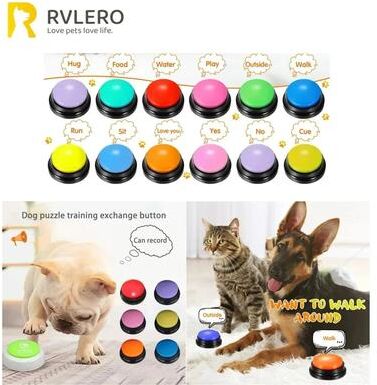
Inspired Living SmartPaws Dog Communication Buttons Voice Recording Button For Pet Training greenGive your pet a fun, simple way to speak with you. This easypress voice recording button lets you record short words or commands your dog can learn through repetition. Ideal for curious pets, new training routines, and owners who love interactive...23,97 $*Shipping: 0,00 $Secure redirect to the provider
-
Uplift Treasures Dog Communication Buttons Voice Recording Training Buzzer For Talking Pets pinkProduct Description Teach your pet to talk with these fun Voice Recording Dog Communication Buttons. Each button lets you record a 30 second custom message, making it perfect for training dogs and cats to express needs like food, play, or outside....54,97 $*Shipping: 0,00 $Secure redirect to the provider
-
Uplift Treasures Voice Recording Dog Communication Buttons For Pet Training orangeProduct Description: Train and interact with your pet in a fun and engaging way using these voice recording communication buttons. Designed for dogs and other pets, these training buzzers allow you to record up to 20 seconds of custom audio...49,97 $*Shipping: 0,00 $Secure redirect to the provider
-
Uplift Treasures Voice Recording Dog Communication Buttons For Pet Training blueProduct Description: Train and interact with your pet in a fun and engaging way using these voice recording communication buttons. Designed for dogs and other pets, these training buzzers allow you to record up to 20 seconds of custom audio...49,97 $*Shipping: 0,00 $Secure redirect to the provider



-
Was the degree of homogeneity correctly calculated?
Yes, the degree of homogeneity was correctly calculated. The formula used to calculate homogeneity takes into account the number of categories and the distribution of values within those categories, providing an accurate measure of how similar or different the data points are. By applying this formula to the dataset, the degree of homogeneity was determined accurately. **
-
How can one check for homogeneity in mathematics?
One can check for homogeneity in mathematics by examining whether a mathematical expression or equation remains unchanged when all its variables are scaled by a common factor. For example, in an equation like ax + by = c, if we multiply both sides of the equation by a constant k, the equation remains unchanged if a and b are both multiplied by k. This property is known as homogeneity. Another way to check for homogeneity is to verify that the dimensions of all terms in an equation are consistent, meaning that they have the same units. If an equation is homogeneous, it means that it is invariant under scaling, which can be a useful property in mathematical analysis and modeling. **
-
What are pronunciation problems and articulation problems?
Pronunciation problems refer to difficulties in producing the sounds of a language accurately, which can result in miscommunication or difficulty being understood by others. This can include issues with specific sounds, stress patterns, or intonation. Articulation problems, on the other hand, specifically refer to difficulties in physically producing the individual speech sounds, such as substituting one sound for another, omitting sounds, or distorting sounds. Both pronunciation and articulation problems can impact an individual's ability to effectively communicate in a language. **
-
Can language fluency be learned?
Yes, language fluency can be learned through consistent practice, exposure, and immersion in the language. By actively engaging with the language through speaking, listening, reading, and writing, individuals can improve their fluency over time. Additionally, seeking out opportunities to interact with native speakers and using language learning resources such as classes, apps, and online tools can also contribute to developing fluency in a new language. While it may take time and effort, with dedication and perseverance, language fluency can certainly be achieved. **


Is the Levene test for homogeneity of variances the same as one-way ANOVA?
No, the Levene test for homogeneity of variances is a separate statistical test used to assess whether the variances of the groups being compared in an ANOVA are equal. On the other hand, one-way ANOVA is a hypothesis test used to determine whether there are statistically significant differences between the means of three or more independent groups. The Levene test is often conducted before performing an ANOVA to ensure that the assumption of homogeneity of variances is met. **
Is the Levene test for homogeneity of variances the same as the one-way ANOVA?
No, the Levene test for homogeneity of variances is a separate statistical test from the one-way ANOVA. The Levene test is used to determine if the variances of the groups being compared in an ANOVA are equal. It tests the null hypothesis that the variances are equal across all groups. On the other hand, the one-way ANOVA is used to test the null hypothesis that the means of the groups are equal. While both tests are related to comparing groups, they are testing different aspects of the data. **
Top-Angebote
Products related to Homogeneity:
-
Uplift Treasures Voice Recording Dog Communication Buttons For Pet Training greenProduct Description: Train and interact with your pet in a fun and engaging way using these voice recording communication buttons. Designed for dogs and other pets, these training buzzers allow you to record up to 20 seconds of custom audio...49,97 $*Shipping: 0,00 $Secure redirect to the provider
-
Uplift Treasures Pet Communication Talk Buttons With Voice Recorder only Buttons 5 PiecesProduct Description: Teach your pet to communicate in a fun and interactive way with these pet talk buttons featuring voice recording and playback functions. Perfect for dogs and cats, these training clickers help pets learn commands, express needs,...119,97 $*Shipping: 0,00 $Secure redirect to the provider
-
Inspired Living SmartPaws Dog Communication Buttons Voice Recording Button For Pet Training greenGive your pet a fun, simple way to speak with you. This easypress voice recording button lets you record short words or commands your dog can learn through repetition. Ideal for curious pets, new training routines, and owners who love interactive...23,97 $*Shipping: 0,00 $Secure redirect to the provider
-
Uplift Treasures Dog Communication Buttons Voice Recording Training Buzzer For Talking Pets pinkProduct Description Teach your pet to talk with these fun Voice Recording Dog Communication Buttons. Each button lets you record a 30 second custom message, making it perfect for training dogs and cats to express needs like food, play, or outside....54,97 $*Shipping: 0,00 $Secure redirect to the provider
-
What is the degree of homogeneity?
The degree of homogeneity refers to the level of uniformity or similarity within a group or population. It measures the extent to which the individuals or elements within the group are alike in terms of certain characteristics or attributes. A high degree of homogeneity indicates a high level of similarity, while a low degree of homogeneity indicates a greater diversity or variation within the group. This concept is often used in statistics, sociology, and other fields to analyze and understand the composition and characteristics of a given group. **
-
Was the degree of homogeneity calculated correctly?
Yes, the degree of homogeneity was calculated correctly. The formula used to calculate homogeneity takes into account the differences between the observed frequencies and the expected frequencies under the null hypothesis. By comparing these values and calculating the chi-square statistic, we can determine the degree of homogeneity in the data. **
-
Was the degree of homogeneity correctly calculated?
Yes, the degree of homogeneity was correctly calculated. The formula used to calculate homogeneity takes into account the number of categories and the distribution of values within those categories, providing an accurate measure of how similar or different the data points are. By applying this formula to the dataset, the degree of homogeneity was determined accurately. **
-
How can one check for homogeneity in mathematics?
One can check for homogeneity in mathematics by examining whether a mathematical expression or equation remains unchanged when all its variables are scaled by a common factor. For example, in an equation like ax + by = c, if we multiply both sides of the equation by a constant k, the equation remains unchanged if a and b are both multiplied by k. This property is known as homogeneity. Another way to check for homogeneity is to verify that the dimensions of all terms in an equation are consistent, meaning that they have the same units. If an equation is homogeneous, it means that it is invariant under scaling, which can be a useful property in mathematical analysis and modeling. **
Similar search terms for Homogeneity
-
Uplift Treasures Voice Recording Dog Communication Buttons For Pet Training orangeProduct Description: Train and interact with your pet in a fun and engaging way using these voice recording communication buttons. Designed for dogs and other pets, these training buzzers allow you to record up to 20 seconds of custom audio...49,97 $*Shipping: 0,00 $Secure redirect to the provider
-
Uplift Treasures Voice Recording Dog Communication Buttons For Pet Training blueProduct Description: Train and interact with your pet in a fun and engaging way using these voice recording communication buttons. Designed for dogs and other pets, these training buzzers allow you to record up to 20 seconds of custom audio...49,97 $*Shipping: 0,00 $Secure redirect to the provider
-
Uplift Treasures Voice Recording Dog Communication Buttons For Pet Training rose RedProduct Description: Train and interact with your pet in a fun and engaging way using these voice recording communication buttons. Designed for dogs and other pets, these training buzzers allow you to record up to 20 seconds of custom audio...49,97 $*Shipping: 0,00 $Secure redirect to the provider
-
Uplift Treasures Pet Communication Talk Buttons With Voice Recorder with Mats 8 PiecesProduct Description: Teach your pet to communicate in a fun and interactive way with these pet talk buttons featuring voice recording and playback functions. Perfect for dogs and cats, these training clickers help pets learn commands, express needs,...157,97 $*Shipping: 0,00 $Secure redirect to the provider
-
What are pronunciation problems and articulation problems?
Pronunciation problems refer to difficulties in producing the sounds of a language accurately, which can result in miscommunication or difficulty being understood by others. This can include issues with specific sounds, stress patterns, or intonation. Articulation problems, on the other hand, specifically refer to difficulties in physically producing the individual speech sounds, such as substituting one sound for another, omitting sounds, or distorting sounds. Both pronunciation and articulation problems can impact an individual's ability to effectively communicate in a language. **
-
Can language fluency be learned?
Yes, language fluency can be learned through consistent practice, exposure, and immersion in the language. By actively engaging with the language through speaking, listening, reading, and writing, individuals can improve their fluency over time. Additionally, seeking out opportunities to interact with native speakers and using language learning resources such as classes, apps, and online tools can also contribute to developing fluency in a new language. While it may take time and effort, with dedication and perseverance, language fluency can certainly be achieved. **
-
Is the Levene test for homogeneity of variances the same as one-way ANOVA?
No, the Levene test for homogeneity of variances is a separate statistical test used to assess whether the variances of the groups being compared in an ANOVA are equal. On the other hand, one-way ANOVA is a hypothesis test used to determine whether there are statistically significant differences between the means of three or more independent groups. The Levene test is often conducted before performing an ANOVA to ensure that the assumption of homogeneity of variances is met. **
-
Is the Levene test for homogeneity of variances the same as the one-way ANOVA?
No, the Levene test for homogeneity of variances is a separate statistical test from the one-way ANOVA. The Levene test is used to determine if the variances of the groups being compared in an ANOVA are equal. It tests the null hypothesis that the variances are equal across all groups. On the other hand, the one-way ANOVA is used to test the null hypothesis that the means of the groups are equal. While both tests are related to comparing groups, they are testing different aspects of the data. **
* All prices are inclusive of VAT and, if applicable, plus shipping costs. The offer information is based on the details provided by the respective shop and is updated through automated processes. Real-time updates do not occur, so deviations can occur in individual cases. ** Note: Parts of this content were created by AI.