Buy speechtherapist.eu ?
We are moving the project
speechtherapist.eu .
Are you interested in purchasing the domain
speechtherapist.eu ?
domain@kv-gmbh.de · 0541-91531010
Buy speechtherapist.eu ?
How do you distinguish determinative compounds and possessive compounds?
Determinative compounds are formed by combining two words to create a new concept, where the first word determines the meaning of the second word. For example, "blackboard" is a determinative compound where "black" determines the type of "board." Possessive compounds, on the other hand, indicate possession or relationship between the two words. For example, "John's car" is a possessive compound where "John" possesses the "car." In summary, determinative compounds determine the meaning of the second word, while possessive compounds indicate possession or relationship between the two words. **
How can one distinguish ionic compounds from molecular compounds?
Ionic compounds are formed from the attraction between positively and negatively charged ions, while molecular compounds are formed from the sharing of electrons between atoms. One way to distinguish between the two is to look at their chemical formulas. Ionic compounds typically consist of a metal and a nonmetal, while molecular compounds consist of nonmetals only. Additionally, ionic compounds tend to have higher melting and boiling points compared to molecular compounds due to their strong electrostatic attractions. Finally, conducting a simple solubility test can also help distinguish between the two types of compounds, as ionic compounds are often soluble in water while molecular compounds may not be. **


Similar search terms for Compounds
Top-Angebote
Products related to Compounds:
-
Inspired Living SmartPaws Dog Communication Buttons Voice Recording Button For Pet Training greenGive your pet a fun, simple way to speak with you. This easypress voice recording button lets you record short words or commands your dog can learn through repetition. Ideal for curious pets, new training routines, and owners who love interactive...23,97 $*Shipping: 0,00 $Secure redirect to the provider
-
Uplift Treasures Dog Communication Buttons Voice Recording Training Buzzer For Talking Pets pinkProduct Description Teach your pet to talk with these fun Voice Recording Dog Communication Buttons. Each button lets you record a 30 second custom message, making it perfect for training dogs and cats to express needs like food, play, or outside....54,97 $*Shipping: 0,00 $Secure redirect to the provider
-
Uplift Treasures Voice Recording Dog Communication Buttons For Pet Training orangeProduct Description: Train and interact with your pet in a fun and engaging way using these voice recording communication buttons. Designed for dogs and other pets, these training buzzers allow you to record up to 20 seconds of custom audio...49,97 $*Shipping: 0,00 $Secure redirect to the provider
-
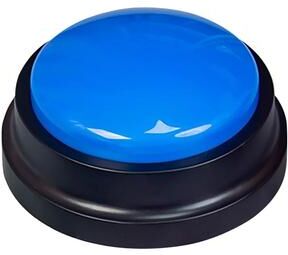
Uplift Treasures Voice Recording Dog Communication Buttons For Pet Training blueProduct Description: Train and interact with your pet in a fun and engaging way using these voice recording communication buttons. Designed for dogs and other pets, these training buzzers allow you to record up to 20 seconds of custom audio...49,97 $*Shipping: 0,00 $Secure redirect to the provider



-
Can you help me with chemistry? I need information about atomic compounds, metal compounds, and ionic compounds.
Of course! Atomic compounds are formed when two or more non-metal atoms are chemically bonded together, such as in molecules like water (H2O) and carbon dioxide (CO2). Metal compounds are formed when a metal atom is bonded to one or more non-metal atoms, such as in compounds like sodium chloride (NaCl) and iron oxide (Fe2O3). Ionic compounds are formed when a metal atom transfers one or more electrons to a non-metal atom, resulting in the formation of positively and negatively charged ions that are attracted to each other, such as in compounds like sodium chloride (NaCl) and calcium carbonate (CaCO3). Let me know if you need more specific information or examples! **
-
Why do molecular compounds have lower boiling points than ionic compounds?
Molecular compounds have lower boiling points than ionic compounds because the intermolecular forces holding the molecules together are generally weaker than the electrostatic forces holding ions together in ionic compounds. In molecular compounds, the intermolecular forces are typically van der Waals forces, dipole-dipole interactions, or hydrogen bonding, which are weaker than the strong ionic bonds in ionic compounds. As a result, less energy is required to overcome these weaker intermolecular forces, leading to lower boiling points for molecular compounds compared to ionic compounds. **
-
What are sodium compounds?
Sodium compounds are chemical compounds that contain sodium as one of their elements. These compounds can be found in various forms, such as sodium chloride (table salt), sodium hydroxide (lye), and sodium bicarbonate (baking soda). Sodium compounds are widely used in industry, agriculture, and everyday life due to their diverse properties and applications. **
-
Name the isomeric compounds.
Isomers are compounds that have the same molecular formula but different structural arrangements. Some examples of isomeric compounds include butane and isobutane, which both have the molecular formula C4H10 but differ in their structural arrangement. Another example is glucose and fructose, which both have the molecular formula C6H12O6 but have different structural arrangements and properties. **


What are atomic compounds?
Atomic compounds are chemical compounds that are composed of individual atoms of different elements bonded together. These compounds are held together by chemical bonds, such as ionic or covalent bonds, and do not contain any molecules. Examples of atomic compounds include sodium chloride (NaCl) and water (H2O). Unlike molecular compounds, which are made up of molecules, atomic compounds are made up of individual atoms. **
What are molecular compounds?
Molecular compounds are chemical compounds formed by the combination of two or more non-metal atoms. These atoms are held together by covalent bonds, which involve the sharing of electrons. Molecular compounds can exist as discrete molecules, such as water (H2O) and carbon dioxide (CO2), and they typically have lower melting and boiling points compared to ionic compounds. Examples of molecular compounds include methane (CH4), ammonia (NH3), and sulfur dioxide (SO2). **
Top-Angebote
Products related to Compounds:
-
Uplift Treasures Voice Recording Dog Communication Buttons For Pet Training greenProduct Description: Train and interact with your pet in a fun and engaging way using these voice recording communication buttons. Designed for dogs and other pets, these training buzzers allow you to record up to 20 seconds of custom audio...49,97 $*Shipping: 0,00 $Secure redirect to the provider
-
Uplift Treasures Pet Communication Talk Buttons With Voice Recorder only Buttons 5 PiecesProduct Description: Teach your pet to communicate in a fun and interactive way with these pet talk buttons featuring voice recording and playback functions. Perfect for dogs and cats, these training clickers help pets learn commands, express needs,...119,97 $*Shipping: 0,00 $Secure redirect to the provider
-
Inspired Living SmartPaws Dog Communication Buttons Voice Recording Button For Pet Training greenGive your pet a fun, simple way to speak with you. This easypress voice recording button lets you record short words or commands your dog can learn through repetition. Ideal for curious pets, new training routines, and owners who love interactive...23,97 $*Shipping: 0,00 $Secure redirect to the provider
-
Uplift Treasures Dog Communication Buttons Voice Recording Training Buzzer For Talking Pets pinkProduct Description Teach your pet to talk with these fun Voice Recording Dog Communication Buttons. Each button lets you record a 30 second custom message, making it perfect for training dogs and cats to express needs like food, play, or outside....54,97 $*Shipping: 0,00 $Secure redirect to the provider
-
How do you distinguish determinative compounds and possessive compounds?
Determinative compounds are formed by combining two words to create a new concept, where the first word determines the meaning of the second word. For example, "blackboard" is a determinative compound where "black" determines the type of "board." Possessive compounds, on the other hand, indicate possession or relationship between the two words. For example, "John's car" is a possessive compound where "John" possesses the "car." In summary, determinative compounds determine the meaning of the second word, while possessive compounds indicate possession or relationship between the two words. **
-
How can one distinguish ionic compounds from molecular compounds?
Ionic compounds are formed from the attraction between positively and negatively charged ions, while molecular compounds are formed from the sharing of electrons between atoms. One way to distinguish between the two is to look at their chemical formulas. Ionic compounds typically consist of a metal and a nonmetal, while molecular compounds consist of nonmetals only. Additionally, ionic compounds tend to have higher melting and boiling points compared to molecular compounds due to their strong electrostatic attractions. Finally, conducting a simple solubility test can also help distinguish between the two types of compounds, as ionic compounds are often soluble in water while molecular compounds may not be. **
-
Can you help me with chemistry? I need information about atomic compounds, metal compounds, and ionic compounds.
Of course! Atomic compounds are formed when two or more non-metal atoms are chemically bonded together, such as in molecules like water (H2O) and carbon dioxide (CO2). Metal compounds are formed when a metal atom is bonded to one or more non-metal atoms, such as in compounds like sodium chloride (NaCl) and iron oxide (Fe2O3). Ionic compounds are formed when a metal atom transfers one or more electrons to a non-metal atom, resulting in the formation of positively and negatively charged ions that are attracted to each other, such as in compounds like sodium chloride (NaCl) and calcium carbonate (CaCO3). Let me know if you need more specific information or examples! **
-
Why do molecular compounds have lower boiling points than ionic compounds?
Molecular compounds have lower boiling points than ionic compounds because the intermolecular forces holding the molecules together are generally weaker than the electrostatic forces holding ions together in ionic compounds. In molecular compounds, the intermolecular forces are typically van der Waals forces, dipole-dipole interactions, or hydrogen bonding, which are weaker than the strong ionic bonds in ionic compounds. As a result, less energy is required to overcome these weaker intermolecular forces, leading to lower boiling points for molecular compounds compared to ionic compounds. **
Similar search terms for Compounds
-
Uplift Treasures Voice Recording Dog Communication Buttons For Pet Training orangeProduct Description: Train and interact with your pet in a fun and engaging way using these voice recording communication buttons. Designed for dogs and other pets, these training buzzers allow you to record up to 20 seconds of custom audio...49,97 $*Shipping: 0,00 $Secure redirect to the provider
-
Uplift Treasures Voice Recording Dog Communication Buttons For Pet Training blueProduct Description: Train and interact with your pet in a fun and engaging way using these voice recording communication buttons. Designed for dogs and other pets, these training buzzers allow you to record up to 20 seconds of custom audio...49,97 $*Shipping: 0,00 $Secure redirect to the provider
-
Uplift Treasures Voice Recording Dog Communication Buttons For Pet Training rose RedProduct Description: Train and interact with your pet in a fun and engaging way using these voice recording communication buttons. Designed for dogs and other pets, these training buzzers allow you to record up to 20 seconds of custom audio...49,97 $*Shipping: 0,00 $Secure redirect to the provider
-
Uplift Treasures Pet Communication Talk Buttons With Voice Recorder with Mats 8 PiecesProduct Description: Teach your pet to communicate in a fun and interactive way with these pet talk buttons featuring voice recording and playback functions. Perfect for dogs and cats, these training clickers help pets learn commands, express needs,...157,97 $*Shipping: 0,00 $Secure redirect to the provider
-
What are sodium compounds?
Sodium compounds are chemical compounds that contain sodium as one of their elements. These compounds can be found in various forms, such as sodium chloride (table salt), sodium hydroxide (lye), and sodium bicarbonate (baking soda). Sodium compounds are widely used in industry, agriculture, and everyday life due to their diverse properties and applications. **
-
Name the isomeric compounds.
Isomers are compounds that have the same molecular formula but different structural arrangements. Some examples of isomeric compounds include butane and isobutane, which both have the molecular formula C4H10 but differ in their structural arrangement. Another example is glucose and fructose, which both have the molecular formula C6H12O6 but have different structural arrangements and properties. **
-
What are atomic compounds?
Atomic compounds are chemical compounds that are composed of individual atoms of different elements bonded together. These compounds are held together by chemical bonds, such as ionic or covalent bonds, and do not contain any molecules. Examples of atomic compounds include sodium chloride (NaCl) and water (H2O). Unlike molecular compounds, which are made up of molecules, atomic compounds are made up of individual atoms. **
-
What are molecular compounds?
Molecular compounds are chemical compounds formed by the combination of two or more non-metal atoms. These atoms are held together by covalent bonds, which involve the sharing of electrons. Molecular compounds can exist as discrete molecules, such as water (H2O) and carbon dioxide (CO2), and they typically have lower melting and boiling points compared to ionic compounds. Examples of molecular compounds include methane (CH4), ammonia (NH3), and sulfur dioxide (SO2). **
* All prices are inclusive of VAT and, if applicable, plus shipping costs. The offer information is based on the details provided by the respective shop and is updated through automated processes. Real-time updates do not occur, so deviations can occur in individual cases. ** Note: Parts of this content were created by AI.