Buy speechtherapist.eu ?
We are moving the project
speechtherapist.eu .
Are you interested in purchasing the domain
speechtherapist.eu ?
domain@kv-gmbh.de · 0541-91531010
Buy speechtherapist.eu ?
Are there only six tenses in the German language?
No, there are more than six tenses in the German language. German has a total of six tenses in the indicative mood (present, simple past, present perfect, past perfect, future, and future perfect), but it also has additional tenses in the subjunctive mood and the conditional mood. These additional tenses include the subjunctive I and II, as well as the conditional I and II. Therefore, there are more than six tenses in the German language when considering all the different moods and forms. **
How are the English tenses formed in the passive voice?
The passive voice in English is formed by using the appropriate form of the verb "to be" (such as "is," "am," "are," "was," "were," "has been," "have been," "had been," "will be," "shall be," "will have been," or "shall have been") followed by the past participle of the main verb. For example, in the present simple tense, the passive voice is formed by using "is/are" + past participle (e.g. "The cake is baked"). In the past simple tense, it is formed by using "was/were" + past participle (e.g. "The cake was baked"). In the future simple tense, it is formed by using "will be" + past participle (e.g. "The cake will be baked"). **


Similar search terms for Tenses
Top-Angebote
Products related to Tenses:
-
Astra Make-up Light Therapy liquid blusher shade 0005 cognitive pink 15 mlAstra Make-up Light Therapy, 15 ml, Blushers for Women, Do you want to give your face a healthy, fresh appearance? The Astra Make-up Light Therapy blusher is here to help. It envelops your cheeks in a soft hint of colour similar to the natural blushing process. But it’s also useful for highlighting features and visually altering the shape of your face, for example when you want your cheeks to appear lifted. Just apply a few layers with a brush or sponge and your cheeks will get a refreshed appearance to enhance any makeup style. Characteristics: gives your face a healthy colour brightens has a pleasantly soft, lightweight texture easy to use gives a shimmer effect How to use: Apply using the applicator built into the lid.6,29 £*Shipping: 3,99 £Secure redirect to the provider
-
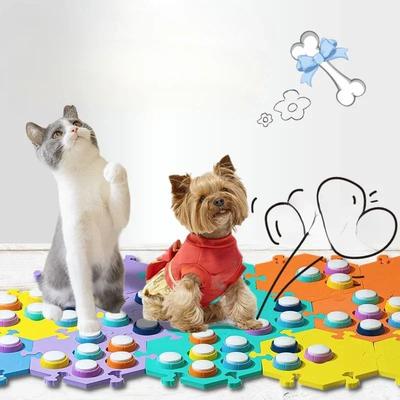
Uplift Treasures Pet Communication Talk Buttons With Voice Recorder with Mats 9 PiecesProduct Description: Teach your pet to communicate in a fun and interactive way with these pet talk buttons featuring voice recording and playback functions. Perfect for dogs and cats, these training clickers help pets learn commands, express needs,...175,97 $*Shipping: 0,00 $Secure redirect to the provider
-
Inspired Living SmartPaws Dog Communication Buttons Voice Recording Button For Pet Training blueGive your pet a fun, simple way to speak with you. This easypress voice recording button lets you record short words or commands your dog can learn through repetition. Ideal for curious pets, new training routines, and owners who love interactive...23,97 $*Shipping: 0,00 $Secure redirect to the provider
-
Uplift Treasures Voice Recording Dog Communication Buttons For Pet Training blueProduct Description: Train and interact with your pet in a fun and engaging way using these voice recording communication buttons. Designed for dogs and other pets, these training buzzers allow you to record up to 20 seconds of custom audio...49,97 $*Shipping: 0,00 $Secure redirect to the provider



-
Which tenses exist in Swiss German that only have two tenses?
In Swiss German, there are two tenses that only have two forms: the present tense and the past tense. The present tense is used to talk about actions happening in the present, while the past tense is used to talk about actions that have already happened. Unlike in Standard German, there is no distinction between the simple past and the present perfect tense in Swiss German. **
-
Which tenses are related?
The tenses that are related in English are the simple present, simple past, and simple future tenses. These tenses are the basic forms of verb conjugation and are used to express actions or states that occur in the present, past, or future respectively. They are often used as building blocks for more complex tenses and can be combined with auxiliary verbs to convey different shades of meaning. Understanding the relationship between these tenses is essential for mastering English grammar. **
-
Which tenses are there in Swiss German that only have two tenses?
In Swiss German, there are two tenses that only have two forms: present and past. The present tense is used to describe actions happening in the present moment, while the past tense is used to talk about actions that have already occurred. These two tenses are commonly used in everyday conversations in Swiss German. **
-
Which tenses are there in Swiss German that have only two tenses?
In Swiss German, there are two tenses that have only two forms: the present tense and the past tense. The present tense is used to describe actions happening in the present moment, while the past tense is used to talk about actions that have already happened. Unlike Standard German, Swiss German does not have a separate future tense, so speakers use the present tense or auxiliary verbs to indicate future actions. **


Which tenses exist in Swiss German where there are only two tenses?
In Swiss German, the two tenses that exist are the present tense and the past tense. The present tense is used to describe actions that are currently happening or habitual actions, while the past tense is used to talk about actions that have already occurred. Swiss German does not have a separate future tense, as the present tense can also be used to express future actions. **
What are the English tenses?
The English language has 12 tenses, which are divided into three main categories: past, present, and future. Each category has four tenses: simple, continuous, perfect, and perfect continuous. The simple tenses refer to actions that are completed at a specific time, the continuous tenses refer to actions that are ongoing or in progress, the perfect tenses refer to actions that are completed before a specific time, and the perfect continuous tenses refer to actions that started in the past and are still ongoing. Understanding these tenses is essential for effective communication in English. **
Top-Angebote
Products related to Tenses:
-
Perfect Picks Market Hearkent Talking Watch For Blind Atomic Radio Controlled Watch For Elderly With Multi Language Voice us English VoiceExperience greater independence with the atomic talking watch designed to make telling time effortless. Created for seniors, visually impaired users, and anyone with low vision, this watch clearly announces the time, date, and alarm at the press of...69,97 $*Shipping: 0,00 $Secure redirect to the provider
-
Uplift Treasures Voice Recording Dog Communication Buttons For Pet Training orangeProduct Description: Train and interact with your pet in a fun and engaging way using these voice recording communication buttons. Designed for dogs and other pets, these training buzzers allow you to record up to 20 seconds of custom audio...49,97 $*Shipping: 0,00 $Secure redirect to the provider
-
Astra Make-up Light Therapy liquid blusher shade 0005 cognitive pink 15 mlAstra Make-up Light Therapy, 15 ml, Blushers for Women, Do you want to give your face a healthy, fresh appearance? The Astra Make-up Light Therapy blusher is here to help. It envelops your cheeks in a soft hint of colour similar to the natural blushing process. But it’s also useful for highlighting features and visually altering the shape of your face, for example when you want your cheeks to appear lifted. Just apply a few layers with a brush or sponge and your cheeks will get a refreshed appearance to enhance any makeup style. Characteristics: gives your face a healthy colour brightens has a pleasantly soft, lightweight texture easy to use gives a shimmer effect How to use: Apply using the applicator built into the lid.6,29 £*Shipping: 3,99 £Secure redirect to the provider
-
Uplift Treasures Pet Communication Talk Buttons With Voice Recorder with Mats 9 PiecesProduct Description: Teach your pet to communicate in a fun and interactive way with these pet talk buttons featuring voice recording and playback functions. Perfect for dogs and cats, these training clickers help pets learn commands, express needs,...175,97 $*Shipping: 0,00 $Secure redirect to the provider
-
Are there only six tenses in the German language?
No, there are more than six tenses in the German language. German has a total of six tenses in the indicative mood (present, simple past, present perfect, past perfect, future, and future perfect), but it also has additional tenses in the subjunctive mood and the conditional mood. These additional tenses include the subjunctive I and II, as well as the conditional I and II. Therefore, there are more than six tenses in the German language when considering all the different moods and forms. **
-
How are the English tenses formed in the passive voice?
The passive voice in English is formed by using the appropriate form of the verb "to be" (such as "is," "am," "are," "was," "were," "has been," "have been," "had been," "will be," "shall be," "will have been," or "shall have been") followed by the past participle of the main verb. For example, in the present simple tense, the passive voice is formed by using "is/are" + past participle (e.g. "The cake is baked"). In the past simple tense, it is formed by using "was/were" + past participle (e.g. "The cake was baked"). In the future simple tense, it is formed by using "will be" + past participle (e.g. "The cake will be baked"). **
-
Which tenses exist in Swiss German that only have two tenses?
In Swiss German, there are two tenses that only have two forms: the present tense and the past tense. The present tense is used to talk about actions happening in the present, while the past tense is used to talk about actions that have already happened. Unlike in Standard German, there is no distinction between the simple past and the present perfect tense in Swiss German. **
-
Which tenses are related?
The tenses that are related in English are the simple present, simple past, and simple future tenses. These tenses are the basic forms of verb conjugation and are used to express actions or states that occur in the present, past, or future respectively. They are often used as building blocks for more complex tenses and can be combined with auxiliary verbs to convey different shades of meaning. Understanding the relationship between these tenses is essential for mastering English grammar. **
Similar search terms for Tenses
-
Inspired Living SmartPaws Dog Communication Buttons Voice Recording Button For Pet Training blueGive your pet a fun, simple way to speak with you. This easypress voice recording button lets you record short words or commands your dog can learn through repetition. Ideal for curious pets, new training routines, and owners who love interactive...23,97 $*Shipping: 0,00 $Secure redirect to the provider
-
Uplift Treasures Voice Recording Dog Communication Buttons For Pet Training blueProduct Description: Train and interact with your pet in a fun and engaging way using these voice recording communication buttons. Designed for dogs and other pets, these training buzzers allow you to record up to 20 seconds of custom audio...49,97 $*Shipping: 0,00 $Secure redirect to the provider
-
Uplift Treasures Voice Recording Dog Communication Buttons For Pet Training greenProduct Description: Train and interact with your pet in a fun and engaging way using these voice recording communication buttons. Designed for dogs and other pets, these training buzzers allow you to record up to 20 seconds of custom audio...49,97 $*Shipping: 0,00 $Secure redirect to the provider
-
Uplift Treasures Voice Recording Dog Communication Buttons For Pet Training rose RedProduct Description: Train and interact with your pet in a fun and engaging way using these voice recording communication buttons. Designed for dogs and other pets, these training buzzers allow you to record up to 20 seconds of custom audio...49,97 $*Shipping: 0,00 $Secure redirect to the provider
-
Which tenses are there in Swiss German that only have two tenses?
In Swiss German, there are two tenses that only have two forms: present and past. The present tense is used to describe actions happening in the present moment, while the past tense is used to talk about actions that have already occurred. These two tenses are commonly used in everyday conversations in Swiss German. **
-
Which tenses are there in Swiss German that have only two tenses?
In Swiss German, there are two tenses that have only two forms: the present tense and the past tense. The present tense is used to describe actions happening in the present moment, while the past tense is used to talk about actions that have already happened. Unlike Standard German, Swiss German does not have a separate future tense, so speakers use the present tense or auxiliary verbs to indicate future actions. **
-
Which tenses exist in Swiss German where there are only two tenses?
In Swiss German, the two tenses that exist are the present tense and the past tense. The present tense is used to describe actions that are currently happening or habitual actions, while the past tense is used to talk about actions that have already occurred. Swiss German does not have a separate future tense, as the present tense can also be used to express future actions. **
-
What are the English tenses?
The English language has 12 tenses, which are divided into three main categories: past, present, and future. Each category has four tenses: simple, continuous, perfect, and perfect continuous. The simple tenses refer to actions that are completed at a specific time, the continuous tenses refer to actions that are ongoing or in progress, the perfect tenses refer to actions that are completed before a specific time, and the perfect continuous tenses refer to actions that started in the past and are still ongoing. Understanding these tenses is essential for effective communication in English. **
* All prices are inclusive of VAT and, if applicable, plus shipping costs. The offer information is based on the details provided by the respective shop and is updated through automated processes. Real-time updates do not occur, so deviations can occur in individual cases. ** Note: Parts of this content were created by AI.